

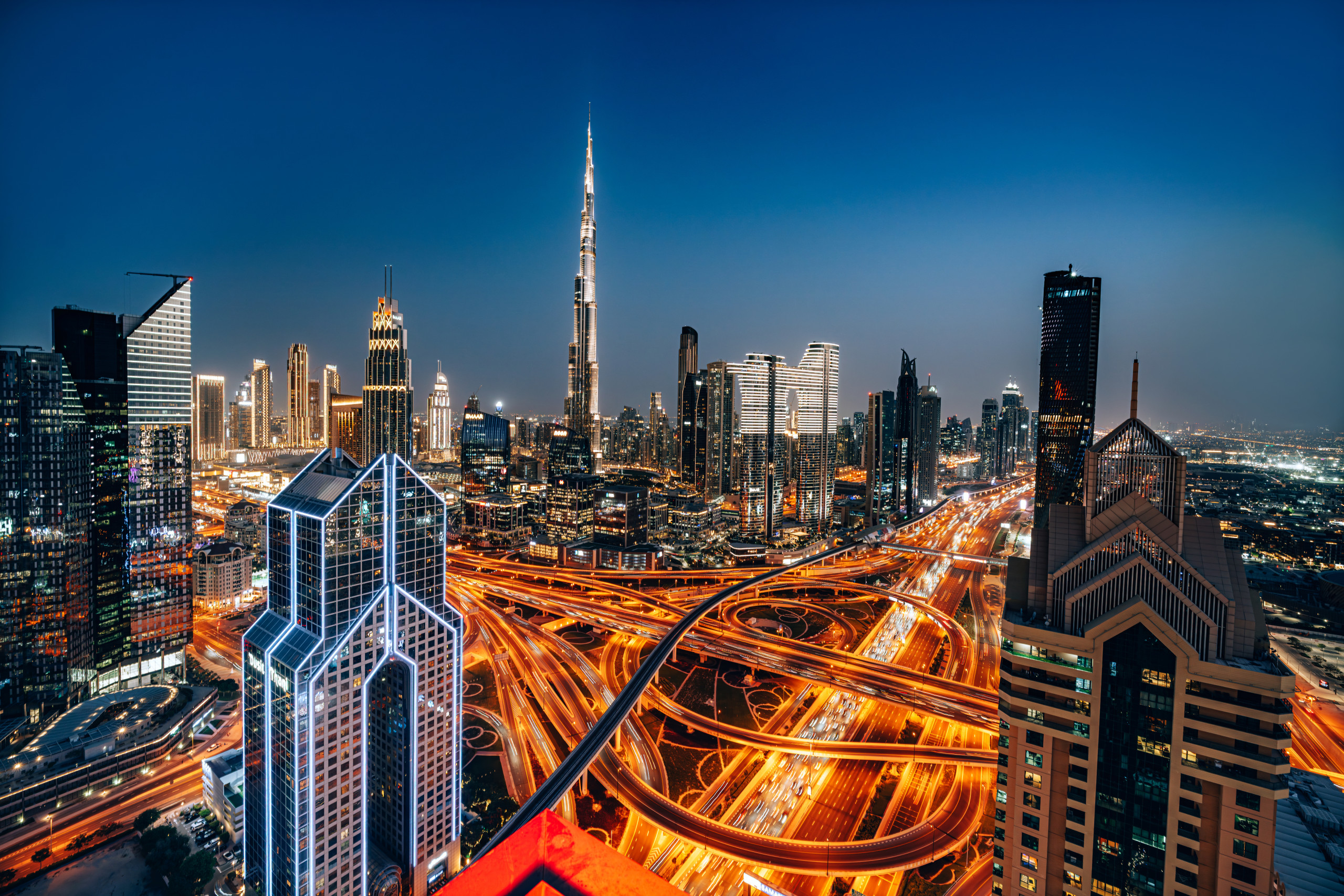
In December 2025, Dubai did something no city had done before — it crossed 2 million international arrivals in a single calendar month. The previous record, set just months earlier, was 1.99 million. For the full year, 19.59 million visitors arrived and collectively spent AED 228 billion — roughly $62 billion USD, and nearly double the AED 117.6 billion recorded in 2022. The average visitor spends around $2,775 per trip, putting Dubai in the same per-visitor yield bracket as London and Paris, two cities with a several-century head start on the hospitality business. Hotel occupancy in H1 2025 hit 80.6%. The average daily room rate climbed to AED 584 ($159), up 5% year-on-year, even as new hotels kept opening. Tourism now accounts for 13% of UAE GDP and supports nearly 900,000 jobs. Dubai closed 2025 with a record. It has set a higher target for 2026. Understanding the trends in Dubai Tourist Spending is crucial for stakeholders in the tourism industry.
So where exactly does the AED 228 billion go? The answer is more interesting than it first appears. Most major tourism cities are dominated by one or two spending categories. Dubai is different. Accommodation takes the largest share at 32%, but shopping sits right behind at 28%, food accounts for a fifth of total spend, and even attractions and transport pull meaningful numbers. The city’s physical layout reinforces all of it simultaneously — malls sit next to hotels, hotels face beach clubs, beach clubs have restaurants. What follows is a category-by-category breakdown of where the money lands, drawn from Dubai DET reports, WTTC data, and sector research through 2025–26.
Dubai Tourism: Key Figures at a Glance (2025/2026)
| 19.59M VISITORS IN 2025 +5% year-on-year | AED 228B INT’L VISITOR SPEND 2025 +5.7% vs AED 217B in 2024 | ~13% OF UAE GDP Tourism share | $193 AVG HOTEL RATE 2025 ADR mid-2025, Dubai |
Sources: Dubai DET; WTTC UAE Outlook 2025; grabonuae.ae; Emirates NBD Research
Dubai Tourist Spending: The Big Picture
Dubai’s tourism revenue has roughly doubled since 2022 — from AED 117.6 billion to an estimated AED 228 billion in 2025. That’s not just more visitors arriving; it’s the same visitors spending more per trip. The average international visitor now spends around US$2,775 per stay, which puts Dubai comfortably alongside London and Paris in per-visitor yield, and well ahead of most Asian and Middle Eastern competitors. This rise in Dubai Tourist Spending highlights the city’s growing appeal as a premier travel destination.
Dubai’s tourism revenue has roughly doubled since 2022 — from AED 117.6 billion to an estimated AED 228 billion in 2025. That’s not just more visitors arriving; it’s the same visitors spending more per trip. The average international visitor now spends around US$2,775 per stay, which puts Dubai comfortably alongside London and Paris in per-visitor yield, and well ahead of most Asian and Middle Eastern competitors.
The WTTC put UAE international tourism expenditure at $62.2 billion for 2025, up from $59.2 billion the year before, calling it ‘dominant’ within global travel. At roughly 13% of UAE GDP and 898,600 jobs, tourism isn’t a side industry here — it’s a primary economic driver, which explains why every infrastructure decision, from metro lines to airport terminals, is evaluated at least partly through the lens of tourist convenience.
Visitor Expenditure Growth: 2022 – 2025 (AED Billion)
| Year | Total Visitor Spend (AED Billion) | Year-on-Year Change |
| 2022 | AED 117.6B | Post-pandemic recovery baseline |
| 2023 | AED 205.4B | +74.7% |
| 2024 | AED 217.3B | +20.3% |
| 2025 (est.) | AED 228.5B | WTTC estimate; +5.7% vs 2024 |
Sources: Dubai DET Annual Reports; roadgenius.com; WTTC UAE Outlook 2025
How Dubai Tourists Split Their Spend: Category Breakdown
One thing that separates Dubai from most major tourism cities is that spending isn’t dominated by a single category. A beach destination might be mostly hotels and food. A cultural capital might skew toward transport and attractions. Dubai manages to capture meaningful share across all five categories simultaneously — accommodation, shopping, dining, entertainment, and transport. That’s not an accident. It’s zoning policy.
Dubai Tourist Spending by Category
| CATEGORY | SHARE OF TOTAL TOURIST SPEND |
| Accommodation | ~ 32% |
| Shopping & Retail | ~ 28% |
| Food & Dining | ~ 20% |
| Attractions & Entertainment | ~ 12% |
| Transport | ~ 8% |
Estimated breakdown based on Dubai DET reports, WTTC data, and hospitality sector analysis. Per-trip average: GoWithGuide, 2023 data.
Accommodation leads, as it does in most premium markets. But the gap between accommodation (32%) and shopping (28%) is unusually narrow for a city of this size. In most places, retail is what tourists do if they have time left. In Dubai, retail is scheduled into the trip. You literally cannot walk from your hotel to the beach in most parts of the city without passing through a mall.
Accommodation: The Biggest Share of Dubai Tourist Spending (~32%)
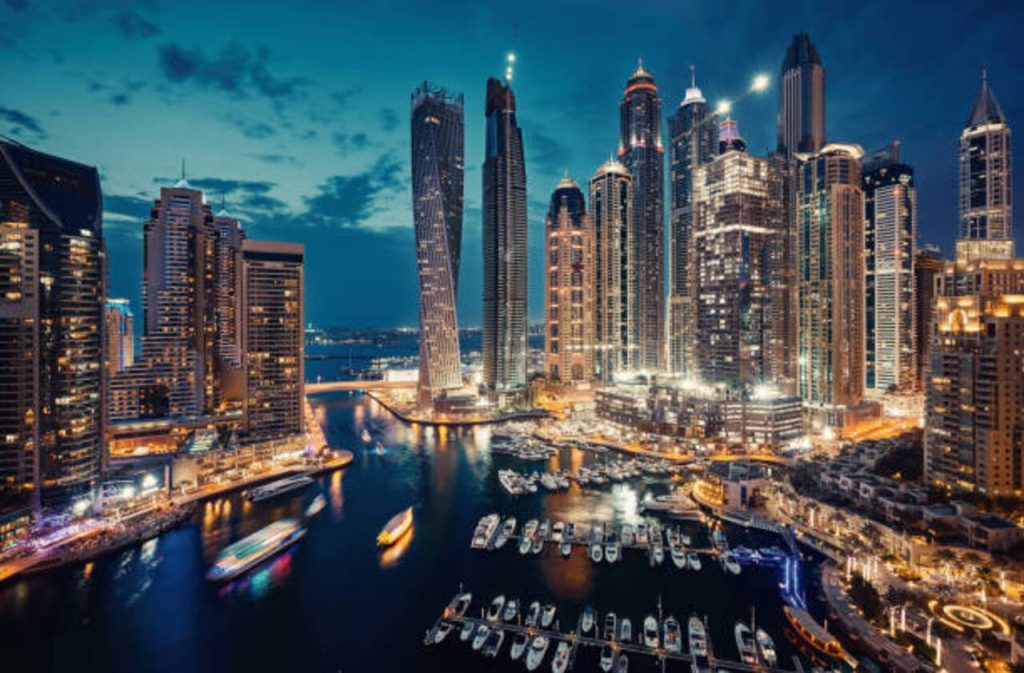
Dubai’s hotel sector is large, premium, and stubbornly well-occupied. The city runs over 830 hotels with 154,000+ rooms, and in the first half of 2025, occupancy sat at 80.6%. For context: global hotel occupancy averaged around 66% in the same period. Dubai running 14 percentage points above that, while simultaneously adding new supply every year, says something about the depth of demand here.
The ADR (average daily rate) in H1 2025 was AED 584, or roughly $159 — a 5% increase year-on-year. RevPAR came in at AED 467 (~$127) for the full year. What’s notable is that rates are climbing even as the supply pipeline grows. That’s a demand story, not just a pricing one. About 78% of visitors choose 4- or 5-star properties, which skews everything upward — Dubai’s ‘budget’ market is thin by design, and the city doesn’t seem particularly interested in growing it.
| In the first half of 2025, Dubai’s average daily hotel rate rose to AED 584 (~$159) — a 5% year-on-year increase — while occupancy reached 80.6%, reflecting sustained demand across the city’s 830+ hotels. — Dubai DET Tourism Performance Report, H1 2025 |
Dubai Hotel Industry: Key Performance Metrics
| Metric | 2024 | 2025 (H1 / Full Year) |
| Hotels in Operation | 832+ | Growing — new supply added annually |
| Total Hotel Rooms | 154,016 (2024) | 154,264 (end 2025) |
| Occupied Room Nights | 43.03 million | 44.85 million (+4%) |
| Hotel Occupancy Rate | 78.2% (full yr 2024) | 80.7% (full yr 2025) |
| Average Daily Rate (ADR) | AED 538 (~$147) | AED 579 (~$158) 2025 (+8%) |
| RevPAR | — | AED 471 (~$128), H1 2025 |
| Avg Length of Stay | ~3.8 nights | 3.7 nights (DET 2025) |
| 5-Star Preference | ~78% of visitors | Consistent |
Sources: Dubai DET Tourism Performance Report H1 2025; Cavendish Maxwell Dubai Hospitality 2024; Emirates NBD Research
Shopping & Retail: The Category Dubai Has Made Its Own (~28%)
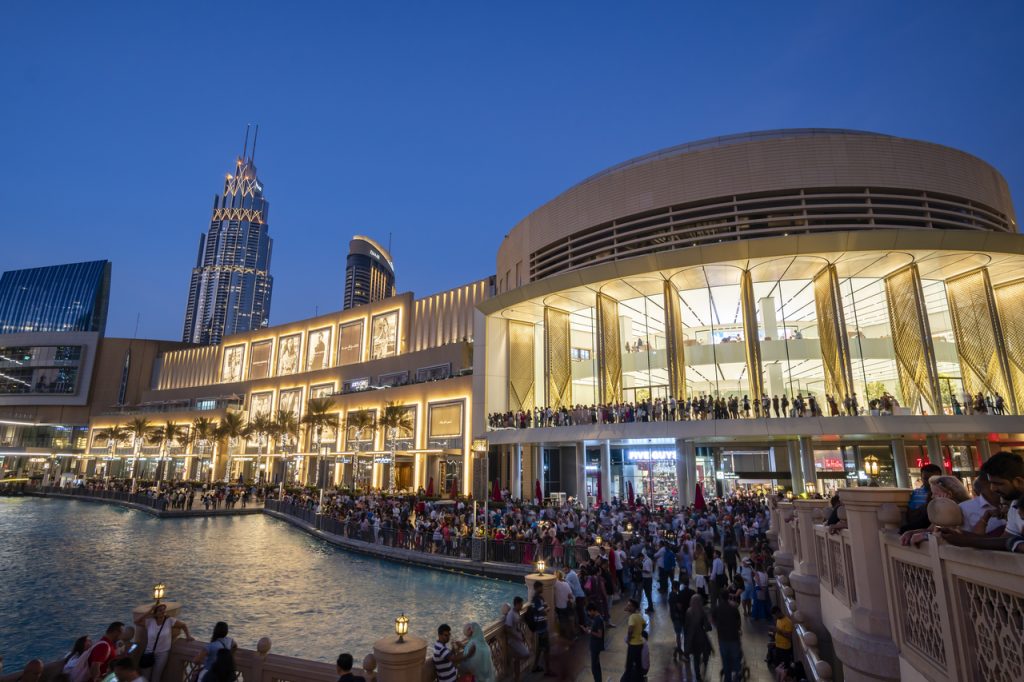
There is a running joke among frequent Dubai visitors that you can’t get from one side of the city to the other without ending up in a mall. It’s not far from accurate. Dubai has over 60 major malls and a retail density roughly 380% higher than London’s. The Dubai Mall had 100 million visits in 2024 — more than New York’s Central Park, more than the Eiffel Tower by a significant margin. It’s not just the world’s most visited mall; it’s one of the world’s most visited places, full stop.
Retail accounts for around 28% of total tourist spend. That number gets turbocharged during the Dubai Shopping Festival — the 30th edition ran December 2024 to January 2025 across 3,500+ outlets, 850+ brands, and AED 50 million in prize giveaways. DFRE’s broader 2025 event calendar delivered a 144% average uplift in spending across its initiatives. Add a 12% VAT refund for international tourists on qualifying purchases and you have a retail proposition that is genuinely hard to match anywhere in the region.
Dubai Shopping Festival: Scale & Impact
| Metric | Data |
| DSF Edition | 30th Anniversary (Dec 2024 – Jan 2025) |
| Festival Duration | 38 days |
| Participating Outlets | 3,500+ across 850+ brands |
| Expected Annual Visitors | 4 million+ |
| Prizes Awarded | AED 50 million (cars, cash, gold) |
| DFRE Retail Spend Uplift | 144% average increase (full 2025 calendar) |
| Shop, Scan & Win Revenue | AED 150 million+ |
| Top Retail Categories | Gold & jewellery, electronics, fashion |
| Tourist VAT Refund | Up to 12% on qualifying purchases |
Sources: DFRE Annual Report 2025; dubaileadersmagazine.com; blog.globalskyvisa.com; gulfnews.com
Food & Dining: A Fifth of Dubai Tourist Spending, and Growing (~20%)
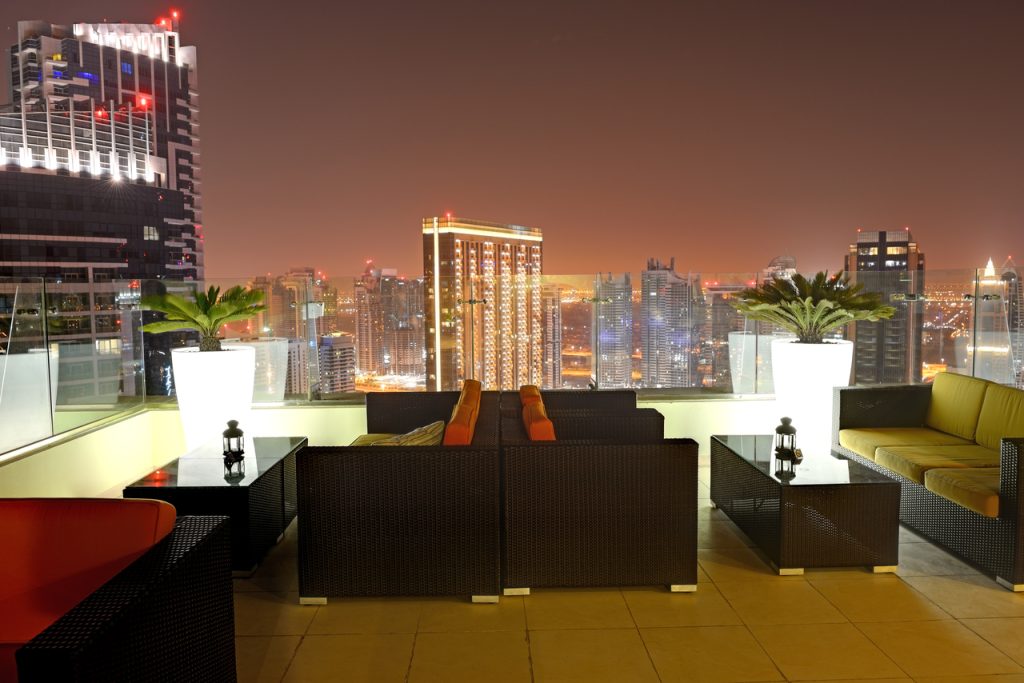
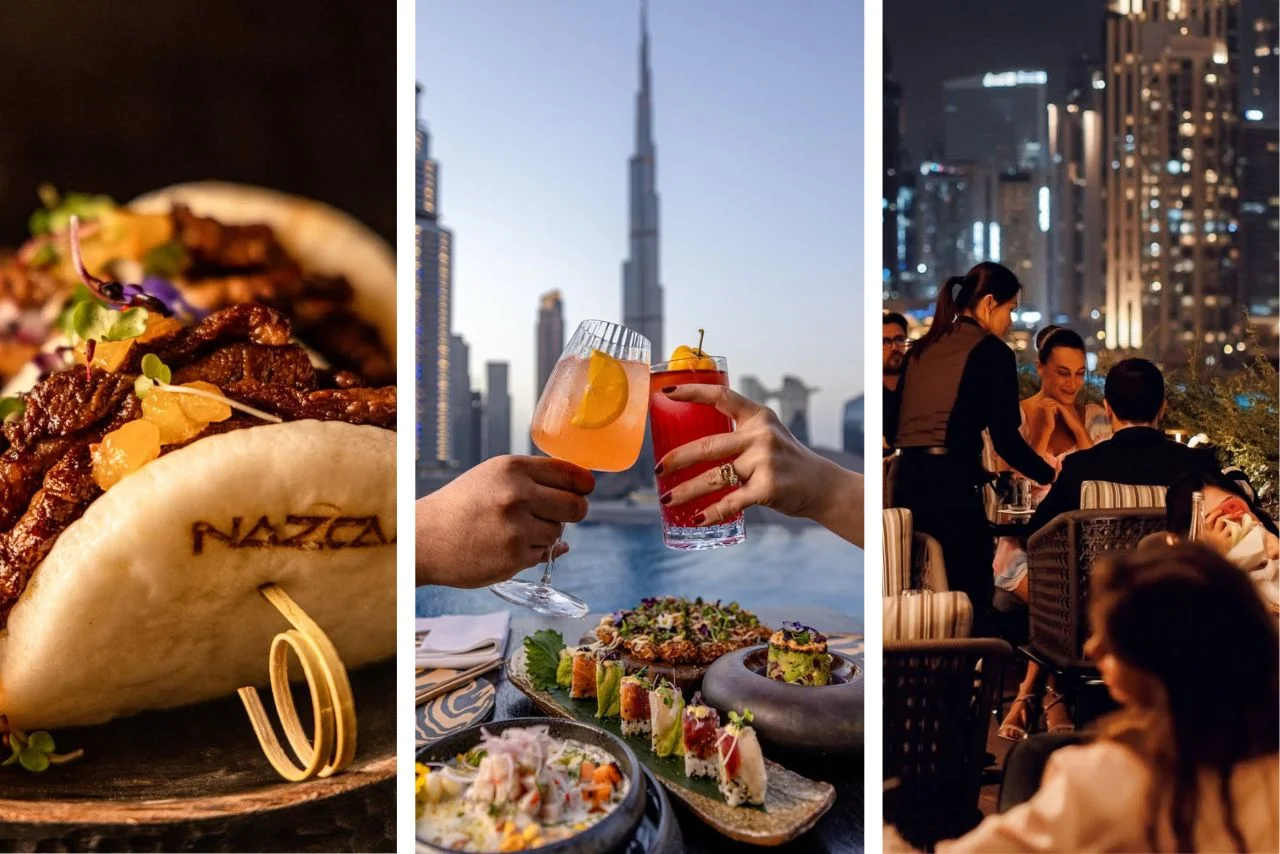
Food spend sits at around 20% of the total — which sounds modest until you realise that ‘20%’ in a city where the average visitor spends $2,775 a trip is still a significant absolute number. Dubai’s dining scene has genuinely evolved. The Michelin Guide arrived in 2022 and awarded stars to restaurants that, frankly, deserved them years earlier. Today you’ll find serious Japanese omakase counters, hole-in-the-wall Yemeni joints in Deira that have been there for thirty years, and rooftop bars where the cocktail costs more than the view deserves. The range is the point.
What makes the F&B numbers interesting from a spending analysis perspective is the geography. Most of Dubai’s best restaurants are inside malls, on hotel rooftops, or along beach club strips. You don’t go to dinner and come home; you go to dinner and walk past three concept stores on the way out. Dwell time is engineered, and it works.
Daily Food & Dining Budget in Dubai (USD, 2025)
| BUDGET TRAVELLER $25 – $35 / day | Street food, cafeterias & fast-casual dining |
| MID-RANGE TRAVELLER $60 – $90 / day | Casual restaurants, cafe lunches & local cuisine |
| LUXURY TRAVELLER $120+ / day | Fine dining, Michelin restaurants & rooftop bars |
Sources: saadatrent.com (2025 price update); budgetyourtrip.com; radicalstorage.com
Attractions & Entertainment: The Fastest-Growing Category (~12%)
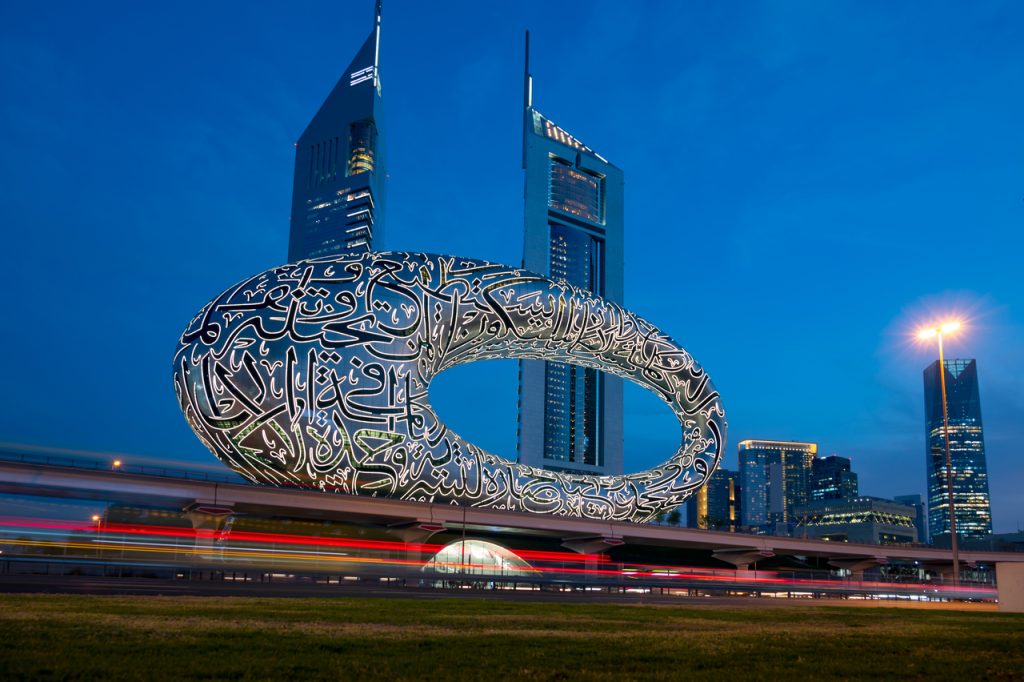
Attractions and entertainment is the smallest category at around 12%, but it’s growing faster than any other. Ten years ago, this category barely registered. Today it includes a Real Madrid theme park, a TeamLab immersive art space, the Museum of the Future (which is, aesthetically at least, the most striking building in a city full of striking buildings), and Ain Dubai — the world’s largest observation wheel, though ‘largest’ is very much on-brand for this city.
The events calendar has become a retention tool as much as an attraction. The Dubai Fitness Challenge brought in 3 million participants in 2025. The Dubai Run had 307,000 runners. These aren’t tourism events in the traditional sense — they’re community events that happen to pull in international visitors as a side effect. DFRE’s 2025 calendar achieved 86% customer satisfaction overall, which is the kind of number that translates into repeat bookings.
Attractions & Entertainment: 2025 Headlines
| 100M DUBAI MALL VISITS 2024 — world’s most visited mall | 3M+ DUBAI FITNESS CHALLENGE 2025 participants |
| 307,000 DUBAI RUN RUNNERS 2025 edition | $50-$80 DAILY ATTRACTIONS COST Mid-range USD per person |
Sources: DFRE Annual Report 2025; MAK Developers tourism data; dubaileadersmagazine.com
Who Is Spending: Dubai’s Top Tourist Source Markets
One of the underappreciated strengths of Dubai’s tourism model is how spread out its source markets are. No single country or region accounts for more than 21% of arrivals. Western Europe leads (21%, 4.1 million visitors), but South Asia, the GCC, CIS markets, and MENA all contribute meaningfully. When one market softens, the others absorb the slack. It’s the kind of diversification that tourism boards spend years trying to engineer, and Dubai has largely achieved it.
International Visitors by Source Region (2025)
| Region | Share | Approx. Visitors | Typical Spending |
| Western Europe | 21% | 4.10M | Experiences & attractions |
| South Asia (incl. India) | 15% | 2.89M | Retail & repeat visits |
| GCC | 15% | 2.99M | Hospitality & dining |
| CIS & Eastern Europe | 15% | 2.89M | Luxury shopping & hotels |
| MENA | 11% | 2.17M | Leisure & business |
| Other Markets | ~23% | ~4.36M | Diverse mix |
Sources: globalmediainsight.com; Dubai DET International Visitor Arrivals, full year 2024
Spending patterns vary considerably by origin. Indian travellers are among the most loyal repeat visitors — they’ve been coming for decades, they know the city well, and they come back regularly for a mix of shopping, hospitality, and family trips. Russian and CIS visitors tend to concentrate spend in premium hotels and retail. GCC visitors — particularly from Saudi Arabia and Kuwait — typically make shorter, more frequent trips with a strong dining and leisure focus. Each market has a different spend profile, which is why the overall distribution across categories stays relatively balanced.
Dubai Tourist Spending Outlook for 2026
December 2025 became the first month in Dubai’s history to record over 2 million international arrivals. That’s a useful data point, but what’s more telling is the ADR trajectory — hotel rates are rising faster than visitor numbers, which means the city is making more money per arrival even without filling additional rooms. That’s a deliberate upmarket shift, and Emirates NBD’s forecast of 4.5% economic growth for 2026 suggests it’s working.
The longer view is interesting too. The AED 20.5 billion Metro Blue Line, due in 2030, is already being designed around a tourism footprint larger than today’s — which says something about how confident the city’s planners are. Dubai International Airport handled 70.1 million passengers in just the first nine months of 2025. Accessibility, which sounds like a boring structural point, is actually the foundation of everything else. You can’t spend money in a city you can’t easily reach.
International Visitor Arrivals: 2019 – 2025
| 2019 16.73M Pre-pandemic peak | 2022 14.36M Recovery year | 2023 17.15M +19.4% YoY | 2024 18.72M +9.2% YoY | 2025 19.59M Record high +5% |
Sources: Dubai DET; grabonuae.ae Dubai Tourism Statistics 2026; gulfnews.com
Key Takeaways: Dubai Tourist Spending by Category
Pull it all together and the picture is of a city that has done something genuinely difficult: built a tourism economy where no single category dominates, where the spend is spread, and where the infrastructure reinforces every category simultaneously. Here’s the short version:
- Accommodation (~32%) is the single largest spend category, driven by premium hotel positioning, 80%+ occupancy, and ADR growth of ~8% YoY in 2025.
- Shopping & retail (~28%) is structurally embedded into the visitor experience — amplified by a world-class year-round festival and retail events calendar.
- Food & dining (~20%) is growing in sophistication and share, with a scene that now functions as a tourism draw in its own right.
- Attractions & entertainment (~12%) is the fastest-growing segment, fuelled by new theme parks, world-class events, and a relentless pipeline of new openings.
- Transport (~8%) is the most price-efficient category, supported by a strong public metro network alongside premium ride-hail and taxi options.
The honest answer to “where does Dubai tourist spending go” is: everywhere, and in roughly the proportions the city planned for. The malls sit next to the hotels. The hotels face the beach clubs. The beach clubs have restaurants. The restaurants are inside the malls. It’s circular by design, and at AED 228 billion a year, it’s working.

 1 AED
1 AED