

When the world slowly started moving ahead again in 2021 post COVID, Dubai was already holding the door open. While most major cities were still figuring out reopening protocols, Dubai had quietly positioned itself as the first major destination to declare itself fully back in business. What happened next wasn’t simply a tourism rebound — it was the beginning of a property market transformation that few economists had predicted at that scale.
The connection between footfall and property values is nothing new. But in Dubai’s case, the correlation between rising visitor numbers and surging Dubai real estate transactions between 2021 and 2026 is striking enough to raise a genuine question: has tourism become the single most important structural force behind the emirate’s property boom? Part of what makes Dubai an interesting case study is that it doesn’t fit the usual mould. Most cities with strong tourism economies treat their visitor and residential markets as essentially separate beasts — different buyers, different motivations, different price drivers. Dubai, for reasons that are partly geographical, partly regulatory, and partly the result of very deliberate city planning, has spent the last decade blurring that line. The pandemic, counterintuitively, accelerated that process. When international travel froze and then thawed, the people who came back to Dubai were often doing more than taking a holiday. They were scouting.
▸ Dubai International Tourist Arrivals: 2019–2025
| Year | Tourists (Millions) | YoY Change | Context |
| 2019 (Pre-COVID) | 16.73M | Baseline | Peak pre-pandemic year |
| 2020 | 5.51M | −68% | Global travel shutdown |
| 2021 | 7.28M | +32.7% | Gradual reopening; Expo buzz |
| 2022 | 14.36M | +97.3% | Full recovery; Expo 2020 legacy |
| 2023 | 17.15M | +19.4% | Surpassed 2019 for first time |
| 2024 | 18.72M | +9.0% | Record year; DXB hit 92M pax |
| 2025 | 19.58M | +4.6% | New all-time high |
Source: Dubai Department of Economy and Tourism (DET); Dubai Airports Authority 2025
The numbers tell a clear story. Dubai welcomed 7.28 million tourists in 2021 — a modest start, but a 32% climb from the pandemic’s worst year. By 2022, the figure nearly doubled to 14.36 million, and then kept climbing: 17.15 million in 2023, 18.72 million in 2024, and an estimated 19.58 million in 2025. That last figure didn’t just beat the pre-pandemic peak — it demolished it. Dubai’s entire 2019 tally was around 16.7 million. The city has now grown its visitor base by more than 17% beyond its former best.
Dubai International Airport underscored this trajectory in its own way. Passenger volumes crashed to 29.1 million in 2021, then surged to 66.1 million in 2022, 87 million in 2023, and crossed 92 million in 2024 — a new all-time record. By 2025, the airport was handling 95.2 million passengers, and for the first time, it wasn’t really “recovering.” It was operating at a level the city had simply never seen before. The source markets behind these numbers matter too. India has consistently been Dubai’s largest single source of visitors, sending over 2.2 million tourists in 2024 alone — up 12% on the pre-pandemic peak of 1.97 million. Based on 2023 figures, Saudi Arabia, the UK, Russia, and China round out the top five. What’s changed since 2021 is the profile of who’s travelling: longer stays, higher spending, and a growing share of what the industry now calls ‘lifestyle visitors’ — people who aren’t just ticking off the Burj Khalifa but genuinely testing the city as a place to live, work, or park capital.
Dubai’s Property Market Runs Parallel to Tourism — And It’s No Coincidence
It’s tempting to view Dubai’s real estate boom as a separate story driven by golden visas, tax-friendly policies, and wealth migration from Europe and Russia. These factors are real. But the timing, geography, and nature of the Dubai property surge align too neatly with the tourism recovery to be treated as independent events.
| AED 761B Transaction Value Real estate deal value in 2024 — up 20% YoY | 226,000 Transactions Property deals in 2024 — up 36% in volume | +75% Price Growth Citywide avg. price appreciation since Feb 2021 |
In 2021, Dubai’s real estate sector logged over 84,000 transactions worth nearly AED 300 billion — the highest value in recorded history at the time, representing a 72% jump in value over 2020. The trajectory didn’t plateau. By 2024, transaction volumes hit 226,000 — almost three times the 2021 figure — with a combined value of AED 761 billion. Dubai Land Department called it the highest number of procedures in the sector’s history. And in residential transactions alone, 2025 recorded AED 541.5 billion across over 200,000 deals — a segment that itself would rank among the strongest years on record.
▸ Tourism Arrivals vs. Real Estate Transaction Value (2021–2025)
| Year | Tourists (M) | RE Value (AED B) | RE Volume (Transactions) |
| 2021 | 7.28M | ≈300B | 84,000+ |
| 2022 | 14.36M | ≈528B | 122,000+ |
| 2023 | 17.15M | ≈634B | 166,000+ |
| 2024 | 18.72M | 761B | 226,000 |
| 2025 | 19.58M | 541.5B* (res. only) | 200,000+ |
Source: Dubai Land Department (DLD) · *2025 residential transactions only (Cavendish Maxwell FY2025)
What’s striking is not just the scale but the timing. The curves bend upward at the same inflection points — explosive gains between 2021 and 2023, a further acceleration in 2024, sustained growth into 2025. That kind of synchronicity across two ostensibly different markets doesn’t happen by accident. There are structural ties holding them together, and they run deeper than most coverage of Dubai’s property market acknowledges.
How Dubai Tourism Is Directly Fuelling Real Estate Demand
For most of the last decade, the tourism-real estate connection in Dubai was indirect — a city-branding story. Visitors came, liked what they saw, told their wealthy friends, and some of those friends eventually bought a villa. Nice, but slow. What changed after COVID was both the scale and the speed of that conversion pipeline.
| “Tourism is not just filling hotels in Dubai. It is filling bank accounts for savvy real estate investors — and it has fundamentally reshaped which property types command the highest premiums.” |
The most direct mechanism is the short-term rental market. As tourism surged, so did demand for furnished apartments and holiday villas listed on Airbnb, Booking.com, and similar platforms. By mid-2025, Dubai had over 22,000 licensed short-stay properties — a 35% year-on-year increase. Active short-term rental listings had grown 58% in 2024 alone. Investors buying in high-footfall areas like Dubai Marina, Jumeirah Beach Residence, Downtown Dubai, and Business Bay were reporting annualised yields of 9–12% from holiday home rentals, compared to 5–7% for conventional long-term leases. The math was obvious: owners who rented short-term were earning up to 30% more than their long-term counterparts in comparable units.
This economics shift changed buyer behaviour. Instead of treating Dubai property as a long-term hold, a growing cohort of investors — particularly from India, Europe, and the GCC — began purchasing with explicit rental-yield intent, timing their acquisitions around peak tourist seasons and major events. The result was a compression of the typical buyer-seller discovery cycle, and a sharp uptick in off-plan purchases in areas with established or planned tourist infrastructure. Developers have been quick to read this shift. Major names like Emaar, DAMAC, and Nakheel have increasingly launched projects in areas with high tourist footfall rather than purely residential catchments, and several now offer built-in holiday home management as part of the purchase package. Some units are marketed explicitly with projected Airbnb yields rather than traditional rental income. It’s a telling evolution: the language of hospitality has crept into the language of real estate, and for a growing number of buyers, that’s exactly the pitch they’re responding to.
▸ Hotel Occupancy Rate & Licensed Holiday Homes Growth (2021–2025)
| Year | Hotel Occupancy (%) | Licensed Holiday Homes | Avg. Short-Term Yield |
| 2021 | 62% | ≈10,000 | 5–6% |
| 2022 | 74% | ≈14,800 | 6–7% |
| 2023 | 78% | ≈13,500+ | 7–9% |
| 2024 | 81% | ≈16,000+ | 8–11% |
| 2025 | 82% | 22,000+ | 9–12% |
Source: Dubai Tourism (DET); haus & haus Holiday Rentals Report 2024; Aurega Real Estate July 2025 report
Dubai’s Luxury Property Surge: When High-Value Tourists Become Buyers
The tourism-to-buyer pipeline became especially visible in the luxury segment. In 2024, Dubai recorded 435 residential sales worth more than $10 million each — a figure that would have seemed implausible in 2019. Prime areas like Palm Jumeirah, Downtown Dubai, and Dubai Hills Estate saw double-digit price appreciation. Villa prices in certain pockets of the city climbed so sharply that the average villa transaction in 2024 approached AED 3.5 million.
Much of this was driven by high-net-worth visitors arriving through the tourism funnel and extending their stay — sometimes indefinitely. The average tourist in 2023 spent 13.8 days in Dubai, 73% longer than the 2019 average of 8 days. Extended stays naturally build familiarity with neighbourhoods, with communities, and with the practical question of whether it makes more sense to buy than to keep renting serviced apartments. The nationality split among luxury buyers tells its own story. European investors — particularly from the UK, France, and Germany — have been snapping up units in branded residence projects, drawn by the combination of strong rental yields, no capital gains tax, and a timezone that keeps them within a direct six-to-seven-hour flight of home. Russian buyers surged after 2022, accounting for a disproportionate share of ultra-prime transactions. Meanwhile, Indian high-net-worth individuals, already the city’s largest tourist group, have become its most active foreign property buyers — a conversion rate that property agents describe, only half-jokingly, as the most predictable thing in Dubai real estate.
▸ Year-by-Year Snapshot: Dubai Tourism & Real Estate Key Metrics
| Year | Tourists (M) | RE Value (AED B) | Avg. Stay (Days) | Notable Driver |
| 2019 (Pre-COVID) | 16.73M | ≈175B | 8.0 | Baseline year |
| 2021 | 7.28M | ≈300B | 9.6 | Reopening; Expo 2020 buzz |
| 2022 | 14.36M | ≈528B | 7.8 | Expo legacy; Golden Visa launch |
| 2023 | 17.15M | ≈634B | 13.8 | New attractions; wealth migration |
| 2024 | 18.72M | 761B | ≈10 | Record airport traffic; off-plan surge |
| 2025 | 19.58M | 541.5B* (res. only) | — | Short-term rental boom; 22K+ holiday homes |
Source: Dubai DET; Dubai Land Department; Cavendish Maxwell FY2025 · *Residential segment only
Dubai Real Estate Risks in 2025–2026: What the Growth Numbers Don’t Show
That said, not everything in the data points upward. Off-plan transactions now account for nearly 73% of all sales activity in Dubai — up from around 62% in 2023. That concentration carries risk. A large pipeline of units is approaching completion in 2026 and 2027, and the market’s ability to absorb them depends heavily on continued tourism momentum and population growth sustaining rental demand.
There are also signs that the two curves are beginning to diverge slightly. Tourism growth has been moderating — the jump from 2024 to 2025 was 4.6%, compared to the 9% seen from 2023 to 2024. Property price appreciation is also expected to decelerate to mid-single-digit levels in 2026, according to Cushman & Wakefield. This isn’t a crash — it’s a maturing market finding its equilibrium. But it does suggest that the explosive post-COVID correlation between tourism and real estate may be entering a quieter chapter. The off-plan pipeline is the number most analysts keep circling back to. Around 182,000 new residential units are projected to complete between 2025 and 2026. If tourism growth cools faster than expected — and early 2026 data shows some softness linked to regional geopolitical uncertainty — the short-term rental market could face an oversupply problem in certain pockets. Business Bay and some parts of Jumeirah Village Circle (JVC) are already showing signs of rental yield compression. None of this is a crisis, but it does puncture the idea that Dubai property is an unconditional one-way bet. The tourism link that drove the boom could equally amplify a correction if visitor numbers disappoint for even a couple of consecutive quarters.
The key watch point for 2026 is — With Middle East geopolitical tensions creating some uncertainty around early 2026 visitor numbers, and a significant supply of new residential units entering the market, the question shifts from “is tourism driving property?” to “can tourism sustain the property valuations it helped create?”
Dubai’s Real Estate Strategy: Vision 2040, Golden Visa, and the Tourist-Investor Blueprint
None of this happened accidentally. The connection between tourism and real estate in Dubai is partly market-driven and partly the result of deliberate policy architecture. The Real Estate Sector Strategy 2033, Vision 2040, and various RERA reforms were all designed to align investor confidence with the city’s long-term livability goals. The Golden Visa programme — which grants 10-year residency to property investors crossing certain value thresholds — explicitly blurred the line between tourist and resident. Expo 2020 created an infrastructure and brand tailwind that the city has been riding ever since. The event itself attracted 24 million visits over six months and left behind Expo City Dubai — a repurposed district that now hosts conferences, corporate headquarters, and tech events year-round. The physical legacy is real: new metro links, hospitality capacity, and international brand recognition that would have taken a decade to build organically.
Dubai’s government understood something that many cities are only now beginning to grasp: that in a world of remote work, portable wealth, and curated experiences, a tourist and a potential homeowner are often the same person at different points in the same decision journey. Design the city well enough, and one follows naturally from the other.
So, Is Dubai Tourism Really Driving the Post-COVID Property Boom?
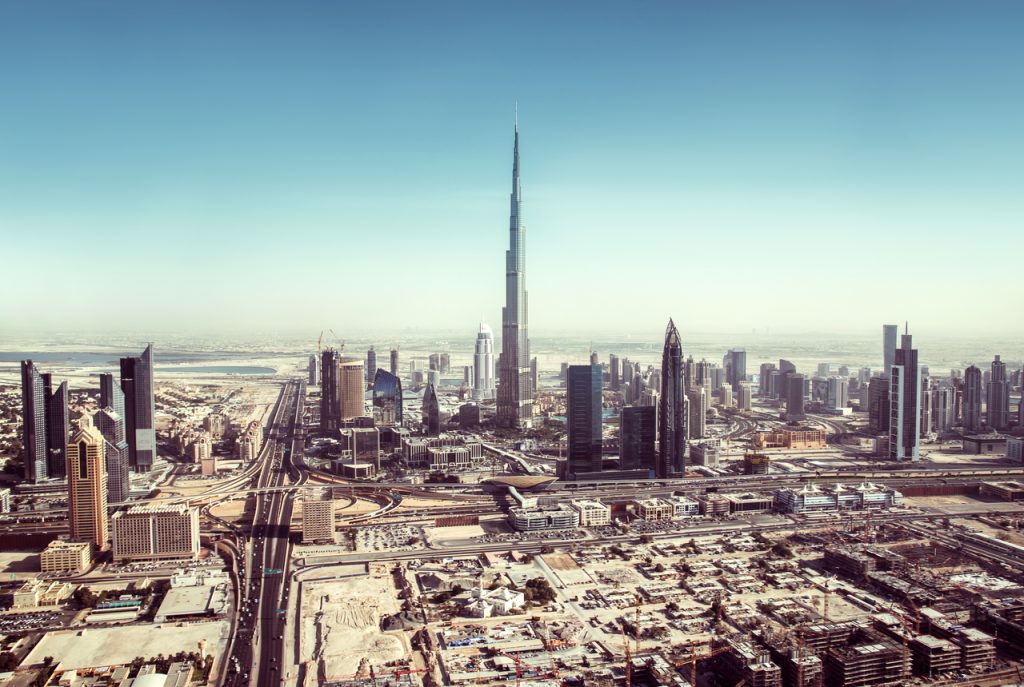
Yes — but with a necessary qualification. Tourism isn’t the only driver, and it may not even be the largest driver in pure quantitative terms. Policy-backed investor confidence, tax advantages, geographic positioning, and aggressive developer activity all play significant roles. But tourism is the activating layer — the thing that converts international awareness into actual transactions, gets buyers into neighbourhoods they’d never otherwise have walked through, and ultimately helped build the short-term rental economy into a standalone asset class within Dubai’s residential market.
Between 2021 and 2026, Dubai has demonstrated something unusual: a city where the hospitality industry and the housing market don’t just coexist but actively reinforce each other. Hotel occupancy hovering above 80% has emboldened developers to push branded residences into the mix. Nearby, a new luxury attraction on Palm Jumeirah quietly lifts premiums on apartments within walking distance. And when a global conference lands at Expo City, it fills Business Bay serviced apartments for a fortnight — and plants the seed for someone to ask their broker about buying one.
The question for Dubai’s next chapter isn’t whether tourism has been driving the property boom — the data is fairly unambiguous on that. The more interesting question is whether a city that has so cleverly fused its visitor economy with its investment economy can sustain both as they scale toward 25 million tourists and a real estate market of genuinely global proportions. If the post-COVID arc is any guide, the smart money is on Dubai figuring it out.

 1 AED
1 AED