

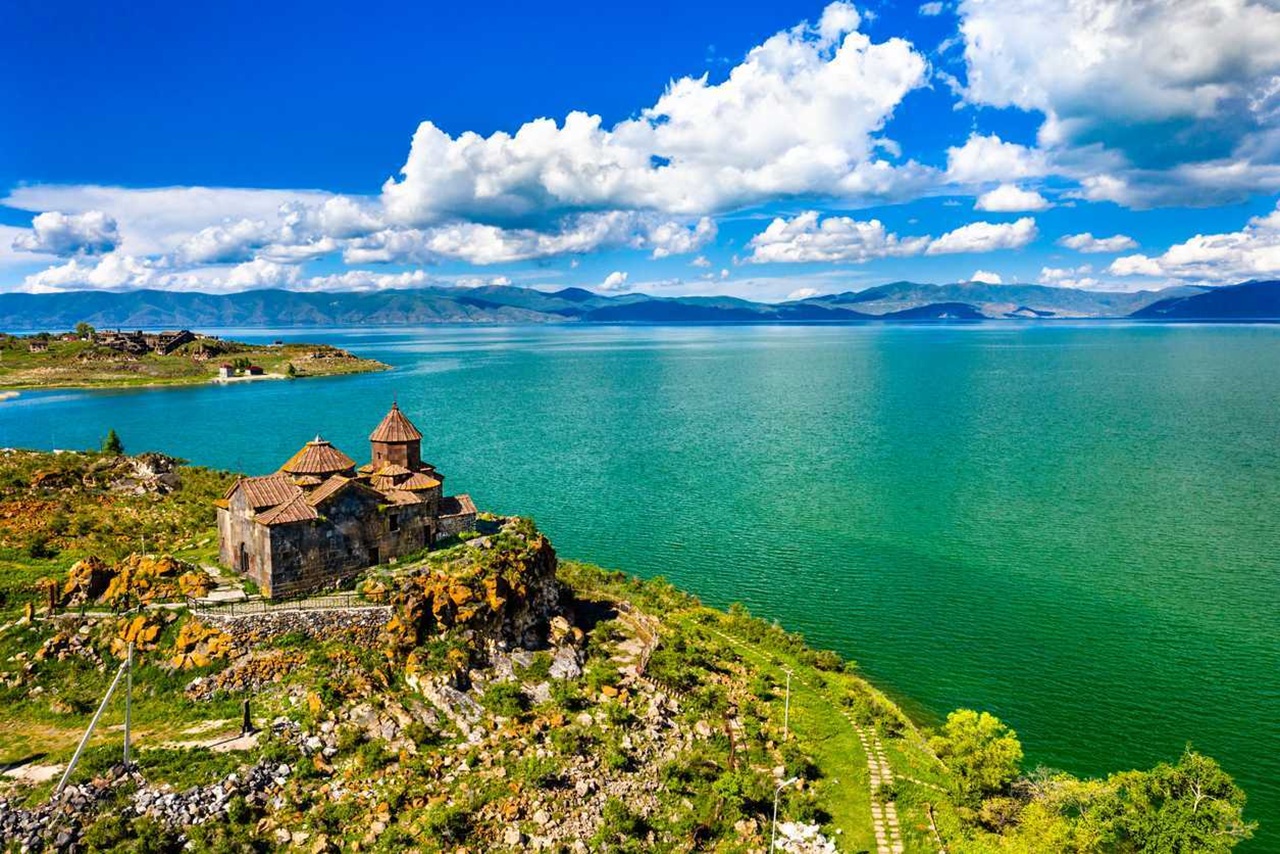
Armenia is the country that doesn’t always make the shortlist when people are planning their next trip. But this is changing really fast. Travel to Armenia has quietly become one of the most talked about travel destinations in the region, a capital with a café culture that rivals Vienna, ancient monasteries that sit inside landscapes dramatic enough to stop conversations, and a culinary scenario that punches well above the country’s profile. The number of international visitors has increased sharply over the past few years and the government has responded by making entry easier and more accessible than it has ever been.
Armenia’s visa rules are more layered than most people realise. There are nationals who can walk in with just a passport, nationals who need to apply online in advance, nationals who qualify because of where they live rather than what passport they hold and a smaller group who must navigate a more formal application process through an embassy. Understanding which category applies to you and how the 90-day clock actually clicks in, is the difference between a seamless arrival and an avoidable problem at the border.
This article covers all aspects that one needs to get through, really well before planning a trip to the Armenia.
What the 90-Day visit rule means for Armenia
When people refer to Armenia’s 90-day visit rule, they are typically talking about one specific context, the bilateral agreement between Armenia and a number of Gulf Cooperation Council states, the most recent formalized rule in February 2026, which allows nationals of those countries to stay in Armenia for up to 90 days within the 180-day period without a visa.
Citizens of over 60 countries can enter Armenia without any pre-arranged visa and stay for up to 180 days within a calendar year. The 90-day figure applies specifically to certain nationalities whose bilateral agreements are framed on a shorter window, including nationals of Saudi Arabia and China, both of which operate under the 90-day rather than 180-day visa-free arrangements.
The 180-day calculation for most visa-free visitors is a rolling measure, not a fixed calendar year. Every year you spend in Armenia counts towards your 180-day allowance within the preceding 365 days. The count does not reset in January 1. If an individual sends 100 day in Armenia between August and November, then returns in February, those previous two months’ days are still in count in the rolling window. This counting period is something pivotal that the visitors should be accustomed to.
For visitors who require an e-visa, the permitted stays are different again. It varies between 21 days or 120 days, depending on which option you select when you are applying. These are not rolling calculations, but are fixed periods beginning from the entry date.

The passport qualification process. Who can enter visa-free?
Armenia divides foreign nationals into roughly four groups and your position in that structure determines how you can enter, how long you can stay and what paperwork is needed.
📍Recommended: Tanzania Tourist Visa for UAE Residents: Complete 2026 Travel Guide
Full visa-free access, up to 180 days
Citizens of the United States, all 27 European Union member states, the United Kingdom, Canada, Australia, New Zealand, Japan, South Korea, Russia, Kazakhstan, Kyrgyzstan, Tajikistan, Uzbekistan, Brazil, Argentina, Ecuador, Panama, UAE, Qatar and Kuwait, among many others can enter Armenia with no pre-arranged visa. They simply arrive with a valid passport and are admitted for up to 180 days per year. No pre registration, no ETA, no application portal, needed, just a valid travel document.
For GCC nationals specifically, a significant development occurred in February 2026, ehen Armenia, the UAE, Saudi Arabia and Qatar, signed a visa-free bloc agreement formalizing permanent visa-free access. UAE nationals now have absolute visa-free entry as a settled, permanent arrangement.
Visa-free for 90 days; specific bilateral agreement
China and Saudi Arabia are among the nationalities whose visa-free arrangements are set at 90 days within a 180-day window rather than the broader 180 day annual allowance. The practical difference matters for long-stay visitors or those planning repeat visits within a short period.
Visas on arrival
Nationals of Canada, Indonesia, Israel, Jordan, Lebanon, Mexico, Thailand, Turkey, and several others can obtain a visa on arrival at the Armenian ports of entry, primarily at the Zvartnots International Airport in Yerevan. Visa on arrival is also available to holders of a valid visa or resident permit from the US, EU/Schengen States, the UK, Australia, New Zealand, Japan, South Korea, Russia, Canada, giving a broader set of travellers an easy path even if their home passport alone does not qualify.
E-visa entry
Nationals of approximately 73 countries who do not qualify under the above categories, like India, Nepal, the Philippines, Egypt, Sri Lanka and many more, must apply for an e-visa before travelling. The process is easy, straight-forward, but need to be completed in advance.
Embassy visa required
A smaller number of nationalities, such as Pakistan, Bangladesh and many African countries, are required to apply through an Armenian embassy or consulate, and in some cases require an approval invitation letter from an Armenian host before they can even begin the application process. Ethnic Armenians from these countries can apply at the border with supporting documentation of Armenian ancestry, such as a birth certificate or baptismal record from a recognized Armenian Church.
For more details and smooth process of applications, one can visit the evisa.mfa.am website to check official eligibility, accurate answer based on your passport type.

How the 90 days are counted in Armenia?
The counting logic in Armenia is simpler than other states that also follow the 90 days rule. For visa-free visitors with a 180-day allowance, the clock starts on a rolling 365-days basis. There is no fixed annual reset. Every day one is physically inside the country counts as one day towards their allowance, including the day of arrival and the day of departure. If you reach 180 days within any trailing 12 month window, you must leave and remain outside Armenia until enough days have passed to create a new allowance in the rolling calculation.
For nationals on the 90-day arrangement, the counting window is 180 days rather than 365 days. This means that the individual can stay up to 90 days within any 180-day period. Leaving and re-entering Armenia after a short trip to some other country does not automatically reset the clock, as days spend outside Armenia do count toward reducing the used portion of the 180-day window, but the calculation is cumulative, not a simple restart.
For e-visa holders, they stay period is already fixed from the date of first entry, A 21-day e-visa gives you 21 days from when you enter the country. Similarly a 120-day e-visa will provide a 120 day allowance to stay. The e-visas can be extended within Armenia, but cannot be renewed by crossing the border or reentering.
One practical note for those entering Armenia, overland from Georgia, the ost common land route for visitors from the north, their entry is recorded digitally at the border crossing and Armenian Border Guard Service officers have access to their travel history. Since January 2025, the Armenian Border Guard Service has operated all border crossings under full Armenian authority, having taken over from Russia border guards who have managed several crossings since 1990s. Processing is now entirely under Armenian control and all records are maintained consistently across all entry points.
📍Recommended: Malta Visa for UAE Residents: Complete 2026 Application Guide
Thing you can and cannot do on a 90-day visit
Armenia’s visitor framework is comparatively open, but it is not without limits, and misunderstanding those limits can create problems, particularly as the country moves towards a more structured immigration regime later in 2026.
Things visitors are permitted to do include:
Tourism, which is the most straightforward one. Sightseeing, hiking, visiting historical and cultural sites, enjoying the restaurant and café culture, attending events and festivals. All of these fall cleanly within the visitor framework regardless of which entry category one came in under.
Regarding family and personal visits, staying with relatives or friends, attending weddings, funerals, or other personal events are allowed. Business visits including attending meetings, conferences, negotiations and trade events are allowed, though taking up employment or operating as a local service provider is not permitted under the Armenian Immigration rules.
Armenia is currently one of the accommodating countries for digital nomads and remote workers who are employed by non-Armenian companies and clients. The country does not currently enforce a strict distinction between being present in Armenia and working remotely for an overseas employer on a visitor basis. Travellers planning to extent stays for remote work purposes should explore Armenia’s emerging digital nomad pathways or seek legal advice on their status.
Things visitors are not permitted to do include:
Working for an Armenian employer or providing services to Armenian clients on a paid basis is not permitted on a visitor visa or even a visa-free entry. Enrolling in long-term educational courses is also outside the visitor-visa route. Accessing Armenian state social services is not available for short stay visitors.

Armenia’s e-visa procedure
For nationals who require an e-visa, Armenia’s system is one of the most straightforward in the region. The entire process is handled through the official portal at evisa.mfa.am, managed by the Armenian Ministry of Foreign Affairs, and most applications are decided within three working days.
Types of e-visas
There are two standard e-visa types for tourism and most personal visits. A 21-day single entry visa priced at approximately USD 8 and a 120-day single-entry visa priced at approximately USD 38. Both are non-refundable once paid. The 120-day is significantly better value for someone planning more than a short stay.
Documents needed for application
A valid passport with at least six months of remaining validity beyond your planned entry date and at least one blank page for stamps is the basic requirement. Along with that, a recent passport size photo, meeting the Armenian MFA’s specifications, that is, 3.5×4.5 centimetres, white background, taken within the last six months. Proof of travel purpose such as accommodation booking details, is also needed.
The process itself
One needs to register their email address on the portal and confirm via the activation link. Then the application form needs to be filled and submitted, along with all details. After uploading the documents, and after reviewing everything thoroughly, one can pay the fee. The process is simple and approval takes up to three working days.
Overstaying in Armenia; the consequences
Armenia’s approach to overstay is more administrative than punitive, but the consequences are real and should not be dismissed,
Under Article 201 of Armenia’s Code of Administrative Offenses, overstaying the permitted period results in a financial penalty ranging from 50,000 to 100,000 AMD, depending on the length of the overstay and the circumstances. This fine is typically settled at the border when one exit, or at the Migration and Citizenship Service of the Ministry of Internal Affairs.
Paying the fine alone does not solve the whole problem, but only covers the administrative penalty. The overstay is recorded against the travel history with Armenia. For short or inadvertent overstays with a clear explanation, like missed flight or medical emergencies, the matters are generally handled by the officers at the border itself. However, longer or repeated overstays are treated more seriously and can result in deportation proceedings.
Visiting from Dubai; Things UAE residents need to know
Dubai’s position as a city is one of the world’s most diverse expatriate populations creates a specific and useful lens for understanding Armenia’s entry system.
UAE nationals, holding Emirati passports, have enjoyed visa-free entry to Armenia since September 2023, when the two countries lifted their visa requirements, mutually. This was further cemented by the GCC-Armenia visa-free bloc agreement signed in February 2026, which puts the arrangement on a permanent bilateral footing. UAE nationals can enter Armenia, with just their passports and stay for up to 90 days within any 180-day period.
For the Western expats in Dubai, again, the entry is visa-free and can stay up to 180 days per year. A UAE residence visa makes no difference to this rule.
Indian nationals working in Dubai, face the most nuanced situation. Under standard conditions, Indian passport holders require an Armenian e-visa. However temporary visa exemption running from January 2026, allows Indian nationals who hold a valid UAE residence permit with atleast six months of remaining validity to enter Armenia without a visa. The exemption requires the residence permit to be a physical card or passport sticker displaying the holder’s details in Latin script with Gregorian calendar dates.
Rules for the Pakistani national residents in Dubai is a bit complex. Pakistan falls under Armenia’s invitation only category under standard conditions. Pakistani residents typically need an invitation letter approved by the Armenian MFA before they can apply for a sticker visa. However, the temporary 2026 exemption, also applies to Pakistani nationals staying in Dubai. This means that the Pakistani expats living in UAE can currently enter Armenia without the standard invitation letter requirement.
Filipino nationals in Dubai, similarly falls in the e-visa category under standard conditions, yet the ones holding a valid residence card of UAE the visa is covered under the 2026 temporary ecemptions, without need for any pre-arranged e-visa.

Extending beyond 90 days: procedure
Armenia is generally welcoming of people who want to stay longer. The country has attracted a significant community of long-term residents, remote workers and people exploring relocation over the past several years. There are several ways through which one can extent their stay.
E-visa extension: E-visas can be extended with Armenia for up to 60 additional days. One needs to apply through the e-visa portal at evisa.mfs.am or also can opt for in person application at the Migration and Citizenship Service before the current visa expires. The extension fee can approximately go up to AMD 500 per day.
Exit and re-entry: Some travellers on e-visas choose to exit briefly to Georgia and re-enter on a fresh visa. This is technically legal and widely practiced.
Temporary Residence Permit: For stays beyond the visitor framework, Armenia offers temporary citizenship permits through several routes like business registration, investment, employment with a registered Armenian employer or family reunification. Armenia’s residence pathway is considered relatively accessible by regional standards.
The November 2026 Reforms: Armenia’s immigration law is undergoing its most significant overhaul in decades, with key changes taking effect from November 2026. Key provisions include mandatory registration for foreigners staying beyond certain time period, stricter alignment between visa status and work authorisation and a new visa category that is supposed to be formalized.
What makes Armenia unusual among its region peers is the combination of genuine accessibility and genuine substance.
Frequently Asked Questions
Can I enter Armenia on a UAE residence visa alone, without my home country passport?
The answer is a no. Your UAE residence visa is not a travel document and does not grant you entry to Armenia independently. You must travel on your valid national passport. The UAE residence card may serve as a qualifying document for the 2026 temporary visa exemption, valid till July 2026.
I am a UAE national. Do I need to apply for anything before visiting Armenia?
No. UAE nationals have full visa-free access to Armenia under both the bilateral agreement and the 2026 GCC bloc arrangement. Simply carry your UAE passport.
How much money should I have available to show at the Armenian border?
Armenia does not publish a fixed minimum or maximum funds requirement for visitors. Officers at the ports may ask you about your financial means, particularly for longer stays. A sensible guideline is to have evidence of sufficient funds to cover your intended stay.
My e-visa was rejected. What should I do?
There is no formal appeal process for e-visa rejections through the portal. You can reapply and its worth reviewing your application for errors in personal or passport details, which are common cause of rejection. In some cases, a consular visa application through an Armenian embassy may be an alternative route.
Travel Smarter With These Visa Tips
Check Ireland Visa Requirements Today
Explore Ireland tourist visa eligibility, processing time, application process, and travel tips for UAE residents in 2026.
Discover Turkey Visa Application Steps
Check Turkey visa types, online application details, required paperwork, and travel guidelines for UAE residents.
Explore Zimbabwe Tourist Visa Rules
Discover Zimbabwe tourist visa requirements, entry rules, fees, and important travel information for UAE residents.
Explore Hungary Visa Process Easily
Discover Hungary visa rules, required documents, fees, and application steps for UAE residents planning a Europe trip in 2026.
Check Cambodia Visa Process Quickly
Explore Cambodia tourist visa application methods, travel requirements, fees, and essential tips for UAE travelers.


