

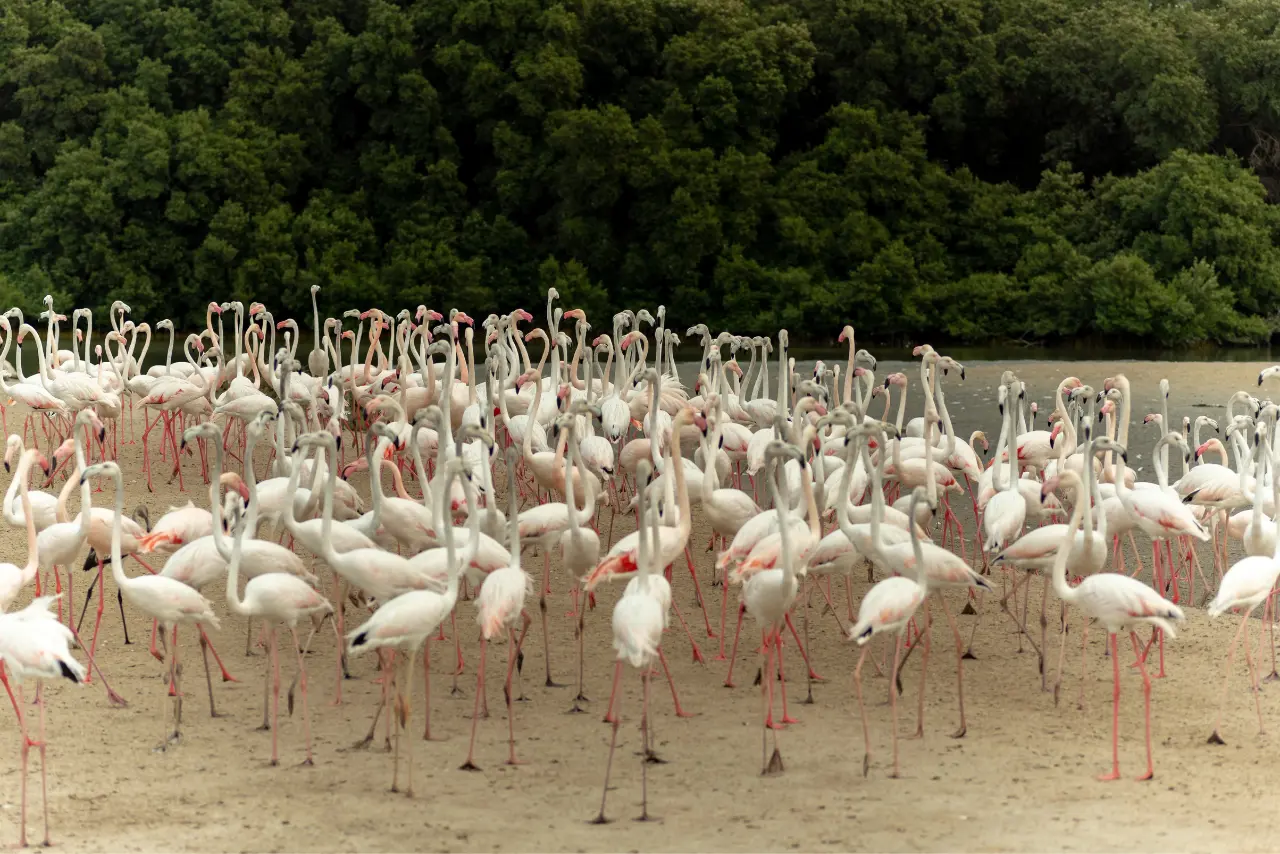
A Free, UNESCO-Recognised Wetland Reserve at the Mouth of Dubai Creek in the Heart of the City
Ras Al Khor Wildlife Sanctuary is one of the most extraordinary natural destinations in the UAE, a sprawling 6.2 square kilometre protected wetland sitting at the mouth of Dubai Creek, less than 10 kilometres from the Burj Khalifa, with the city’s iconic skyline rising visibly above the tree line from within the sanctuary itself. The name translates from Arabic as Cape of the Creek, a description that perfectly captures its geography, where freshwater meets the tidal currents of the Arabian Gulf in a rich, biologically diverse ecosystem of salt flats, mangrove forests, intertidal mudflats, and open lagoons.
Established in 1985 and officially declared a protected area by Dubai Municipality on 1 March 1998, the sanctuary was designated a Ramsar Wetland of International Importance in 2007 under the Ramsar Convention, recognising its significance to global biodiversity, and has since also been identified as a Globally Important Bird Area by BirdLife International, placing it among the most ecologically significant wetlands in the entire region. Admission is completely free for all visitors of all ages, making it one of the best free things to do in Dubai and a genuinely accessible nature experience that requires no booking, no ticket, and no preparation beyond arriving with a camera and a pair of binoculars.
The sanctuary is home to over 450 species of fauna and 47 kinds of flora, including more than 200 recorded bird species, 13 mammal species, 14 reptile species, 52 fish species, and a variety of crustaceans, making it one of the most species-rich urban wildlife reserves in the world. The resident and migratory bird populations include Greater Flamingos, Ospreys, Grey Herons, Western Reef Egrets, Eurasian Spoonbills, Caspian Terns, Red-wattled Lapwings, Slender-billed Gulls, Black-winged Stilts, Asian Pied Mynas, Kingfishers, Curlews, Indian Silverbills, Spotted Eagles, White Wagtails, Pied Avocets, Purple Sunbirds, Isabelline Shrikes, and Yellow-billed Storks, among dozens of other species.
The sanctuary sits along the East African-West Asian flyway, one of the world’s most important migratory routes, which brings tens of thousands of birds through the wetlands annually, with visitor numbers to the sanctuary itself reaching around 90,000 people from more than 100 countries each year. On particularly fortunate visits, guests have also reported sightings of the rare Indo-Pacific humpback dolphin in the waters of Dubai Creek adjacent to the reserve.
The sanctuary has three designated bird hides, each offering a distinct perspective on the wetland ecosystem and the wildlife within it. The Flamingo Hide, located near the main entrance off Ras Al Khor Road and the E44, is the most popular and accessible of the three and offers spectacular close-range views of the Greater Flamingos, which are present in the sanctuary throughout the year but gather in their largest and most visually dramatic flocks during the winter months from November to March, when hundreds of birds wade through the shallows and paint the lagoon in vivid pink.
The hide is equipped with large viewing windows, mounted binoculars, seating, shade, informational panels describing the birds and their behaviours, and free parking directly adjacent. The Mangrove Hide sits near the eastern edge of the sanctuary and focuses on the mangrove ecosystem and smaller wader species, making it a quieter and more focused birdwatching experience ideal for spotting herons, egrets, sandpipers, snipes, greater cormorants, Eurasian Spoonbills, and occasionally storks during winter.
Visiting during low tide adds an extraordinary dimension to the Mangrove Hide experience, as the mangrove root systems emerge above the waterline, revealing the intricate beauty of the coastal ecosystem and the creatures living within it. The Lagoon Hide, the third of the three, opens onto the widest panoramic outlook across the salt flats and the creek and is best suited for raptor spotting, offering views of every category of bird from waders and ducks to raptors soaring overhead, making it the preferred hide for serious birders who want the full breadth of the sanctuary’s avian life in a single vantage point. The Lagoon Hide has been temporarily closed for renovation, though the Flamingo and Mangrove hides remain fully operational.
Free guided tours are available from Sunday to Thursday between 7:30am and 2pm for visitors who want an educational and narrated experience of the sanctuary, led by Dubai Municipality’s trained guide team who explain the ecology, conservation efforts, and species present across each of the hides. No prior booking is required for individuals and families using the hides independently, though schools and universities must pre-book an educational tour through Dubai Municipality’s online portal.
Photographers using the hides for personal photography are welcome to walk in freely, while professional commercial photography and filming requires a No Objection Certificate from the Dubai Municipality Natural Reserves Section. Researchers and those conducting educational activities also require a prior NOC through the same portal.
Bird hides are open from 7:30am to 5:30pm during the winter months, with extended hours from 6am to 6pm between April and September when the heat requires earlier morning visits for the best experience. The best time to visit for flamingo viewing is between 10am and 4pm during the winter season, when the birds are most active at feeding time. December through March is the peak season for migratory birds and the largest flamingo flocks, and arriving in the cooler early morning hours on weekdays guarantees both the best wildlife viewing conditions and the smallest crowds.
Summer visits are possible, with bird populations smaller but still present, and early morning arrival is particularly important during the hotter months. There are no cafes, restaurants, or restrooms inside the sanctuary, so visitors are advised to bring their own water, snacks, and sunscreen, and to wear light, comfortable clothing and walking shoes. Noise must be kept to a minimum within the hides and along the pathways, and littering or disturbing the wildlife in any way is strictly prohibited. Binoculars and a zoom-lens camera are highly recommended for the best experience.
Getting to Ras Al Khor Wildlife Sanctuary by car is the most convenient option, with the sanctuary accessible off Ras Al Khor Road on the E44, adjacent to the Dubai-Al Ain Road and the industrial area of Ras Al Khor in eastern Dubai. Free parking is available near each hide. By metro, take the Dubai Metro Green Line to Al Jadaf or Creek Station and take a short taxi or Careem ride to the sanctuary, approximately five minutes from either station. Dubai Design District is nearby, Al Fahidi Historical Neighbourhood and Dubai Creek are within 15 minutes, and Downtown Dubai and Burj Khalifa are approximately 10 to 15 minutes by car, making it very easy to combine a sanctuary visit with a broader day out exploring old and new Dubai.
Address: Ras Al Khor Wildlife Sanctuary, Ras Al Khor Road (E44), Ras Al Khor Industrial Area, Dubai, UAE
Phone: Dubai Municipality: +971 4 221 5555
Opening Hours: Winter (Oct–Mar): 7:30am–5:30pm | Summer (Apr–Sep): 6am–6pm

 1 AED
1 AED