

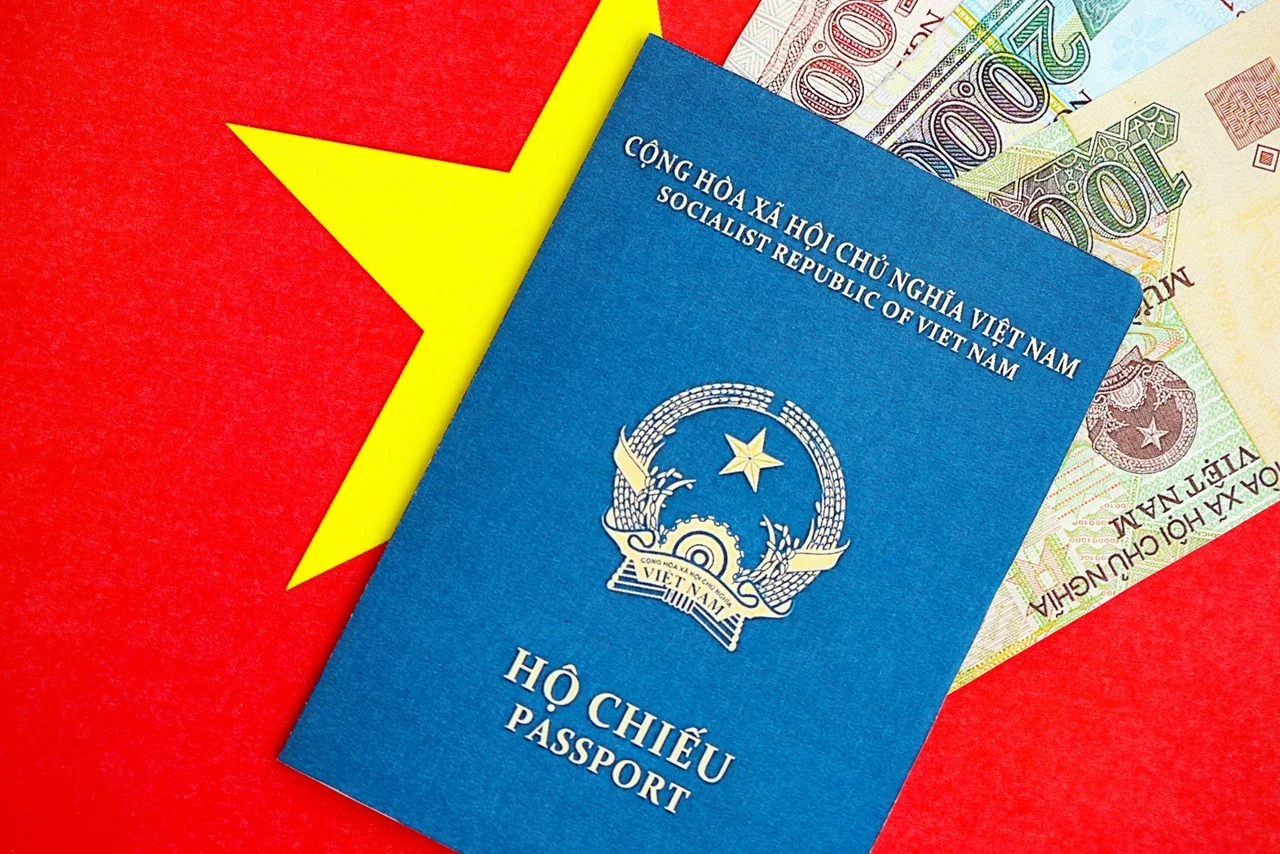
eVisa, Visa on Arrival, Embassy Route, and Everything You Need Before You Fly
If you’re in the UAE and longing for the misty limestone karsts of Ha Long Bay, the busy streets of Hanoi and the coffee-scented afternoons of Hoi An, then this is for you. Well, before you can take your tripod and your digital camera, there is one thing you are required to do- get your Vietnam tourist visa for UAE residents.
The good news is that in 2026, Vietnam has made it much easier. The newly introduced Vietnam eVisa (e-visa), visa on arrival opportunities, and relaxed visa applications for UAE passport holders and exPat residents have made obtaining a Vietnam visa one of the simplest aspects of traveling to Vietnam.
It is a guide for you, the traveler in the UAE who wants clear, practical, no-fluff information written by someone who has experienced the old home-made paper road that leads to the city of Hanoi; the early morning bánh mì experience in Da Nang; slow ferries through Ha Long’s emerald waters.
Let’s take it all apart.
Why Vietnam is Attracting More UAE Travelers
Vietnam has quietly become one of the most appealing long-haul destinations for UAE travelers in 2026. Here’s why:
| Factor | Why It Matters for UAE Travelers |
| Direct flights | Emirates, FlyDubai, and VietJet now offer direct routes from Dubai to Hanoi, Ho Chi Minh City, and Da Nang |
| Affordable luxury | High-end resorts, private tours, and incredible food at a fraction of UAE prices |
| 90-day eVisa | You can now stay up to 90 days with single or multiple entries evisa+1 |
| Diverse experiences | From mountainous Sapa to coastal Phú Quốc, Vietnam offers variety in one country |
| Visa convenience | Simple Vietnam eVisa application process UAE residents can complete from home |
For many UAE residents — whether Emirati citizens or expats from India, Pakistan, the Philippines, or Europe — Vietnam offers culture, adventure, and value in one package.
Overview of Vietnam Tourist Visa Options
While you’re in the planning stages, there are three types of Vietnam tourist visas you’ll come across:
1. Vietnam eVisas (online) – the most preferred option by citizens of the UAE
2. Visa on Arrival (VOA) – Must be pre-approved before travel
Visas issued by the Vietnamese Embassy – applied for personally at the Embassy in Abu Dhabi or the Consulate in Dubai
The Vietnam eVisa is the best option for most visitors as it’s the quickest, least expensive and easiest route for most travelers.
eVisa and Visa on Arrival Availability
Vietnam eVisa
Often offered to citizens of the United Arab Emirates and expats who reside in the UAE of most nationalities. Submit the application online, pay the fee and the eVisa will be sent to you by email.
- Effective for 90 days from the start of engine cleaning.
- Single and multiple-entry Vietnam visa.
- Official fee: 25 USD (single entry) or 50 USD (multiple entry)
- It usually takes 3-5 working days to process.
Visa on Arrival (VOA)
Available only for flights to Vietnam. The only way to obtain a Visa Approval Letter is through an online application; once you have received it, you will need to pay the stamp fee at the airport prior to your flight.
- For those who require emergency processing (4-8 hrs), this is the best to use.
- Does not accept any coins or banknotes in denominations below 10,000 dongs. Must pay service fee at the airport.
- Inability to access on land or water.
Don’t forget: VOA applies if you fly into Hanoi, HCMC, Da Nang, Nha Trang or Phú Quốc. An eVisa or an Embassy visa is required for land borders.

Who Needs a Vietnam Tourist Visa from the UAE?
Do UAE Residents Need a Tourist Visa for Vietnam?
Yes. UAE passport holders, as well as most of the expat residents living in the UAE, do not enjoy visa-free entry into Vietnam. You’ll need a visa for entry unless you come from one of the few countries exempt from a visa.
UAE Passport Holders
Visas are required for tourist and business purposes and UAE citizens are required to obtain a visa.
- A passport that is valid for a minimum of 6 months from the date of entry.
- A minimum of 2 blank passport pages.
- A tourism visa and a business visa are required.
Expat Residents in the UAE
The Vietnam tourist visa for UAE residents is also applicable if you are a resident of the UAE and have a nationality other than Vietnam (India, Pakistan, Bangladesh, Philippines, UK, etc.). Scholarship eligibility and procedure depend on the nationality of your passport, and not your UAE residency status.
Eligible Nationalities for Visa on Arrival
For most nationalities, it is possible to enter Vietnam with a visa on arrival if they:
- Fly into one of Vietnam’s international airports
- Possess a proviso Visa Approval Letter
Entry Validity and Permitted Stay Duration
| Visa Type | Validity | Max Stay | Entry Type |
| eVisa (single entry) | Up to 90 days | Up to 90 days | Single |
| eVisa (multiple entry) | Up to 90 days | Up to 90 days | Multiple |
| Visa on Arrival (1 month) | 30 days | 30 days | Single/Multiple |
| Visa on Arrival (3 months) | 90 days | 90 days | Single/Multiple |
The 90-day eVisa is now the standard for most travelers and gives you the most flexibility.
Vietnam eVisa vs Visa on Arrival
| Feature | Vietnam eVisa | Visa on Arrival |
| Application | Fully online | Online approval + airport stamping |
| Processing Time | 3–5 working days | 1–2 days (urgent: 4–8 hours) |
| Fees | 25 USD (single) / 50 USD (multiple) | Service fee + stamp fee at airport |
| Entry Points | Designated international borders | Airports only |
| Convenience | Print & go | Print approval + pay at airport |
| Best For | Most travelers | Urgent trips or special cases |
Benefits of Applying Online Before Travel
When applying for a Vietnam Tourist Visa for UAE residents online, there are several perceived benefits:
1. No embassy visit provides you with all the options you have, including Dubai, Abu Dhabi and Sharjah for a visit.
2. Faster processing – often 3-5 days, instead of weeks at the Vietnam embassies.
3. Lower cost – The earnings of the Official eVisa start with USD25.
4. Tablet delivery – print and bring one copy of Visa; digital with no print – no print to be provided, but Visa sent via email.
5. Locate the application in the status column titled “transparent”. Find the application in the status column on the online application.
Visa on Arrival Process at Vietnam Airports
If you opt for a visa on arrival, this is how it works:
- Get the most trusted agency to process your Visa Appreciation Letter online.
- Get a letter digitally (print a copy)
Prepare:
- Passport (6+ months validity)
- 2 passport-size photos
- Stamping fee (in cash) USD/VND.
Upon landing at the Vietnam airport:
- Go to the Visa on Arrival counter
- Sign documents + pay stamp fee
- To be granted a visa in a passport. To be issued a visa on a passport.
Stamping fees (2026):
- 25 USD for a single entry
- 50 USD for multiple entries
📍Recommended: Denmark Schengen Visa for Dubai Residents (2026)
Eligibility for Vietnam eVisa
You should meet the following requirements to obtain a Vietnam eVisa:
1. Be out of Vietnam when applying
2. Have a passport that is valid for at least 6 months in advance.
3. Please have 2 blank pages.
4. Avoid falling under Article 21 entry suspension categories
5. Please follow this eVisa official application website: https://evisa.gov.vn
Entry Points Accepting eVisa Holders
All eVisas must be used at other official border crossing points, such as:
Airports:
- Hanoi (Noibai)
- Ho Chi Minh City (Tan Son Nhat)
- Da Nang
- Nha Trang (Cam Ranh)
- Phú Quốc
- Hai Phong (Cat Bi)
Land borders & seaports are also included in the official list on evisa.gov.vn.evisa
Vietnam Tourist Visa Requirements for UAE Residents
Before depending on this type of Vietnam tourist visa requirements, it’s important to get the following documents together:
Valid Passport
Do not forget to check the validity date of your passport since you will have to enter Vietnam; your passport is required to be valid for at least 6 months. On entering and leaving, this must have at least 2 blank pages.
UAE Residence Visa Copy (for expats)
Include a photocopy of your valid UAE Residence visa (if you are not an Emirati citizen). Demonstrate legal residence status in the UAE by keeping this visa valid for at least 3 months after travel dates.
Emirates ID Copy
For expat residents, they need to submit two clear and legible copies of the front and back of their Emirates ID. This will validate the stipulation of Legality of Settlement in the UAE and connect your ID to your application.
Passport-Size Photo
Upload a recent 4×6 photo in a neutral white background with no waves or shadows. For religious reasons, it is OK to wear glasses or a head covering as long as there is no obstruction to viewing the face.
Return Flight Tickets
A confirmed return or onward flight ticket indicating entry and exit dates to/from Vietnam is necessary. It’s just proving a point to immigration that you are going to leave Vietnam before the end of your visa.
Hotel Booking Confirmation
Provide details of accommodation for the first night in Vietnam, or complete the travel schedule of hotel stays in Vietnam. This can be a confirmation from a booking agency or, if staying with a host, a letter.
Proof of Sufficient Funds
Bring current bank statements (last 3 months) or proof of cash with you: it is important that you can support yourself if you go there. In case they want to check whether you have adequate money to travel, which is usually about 50-100 USD per day.
Travel Itinerary
Make a simple travel schedule for your trip to Vietnam, including trips, dates and activities. This will not always be strictly enforced, but it will help to explain why you are trying to come in and give you a greater sense of a plan.
📍Recommended: Japan Tourist Visa from Dubai in 2026
How to Apply for a Vietnam Tourist Visa From UAE
Step 1: Choose Your Visa Type
Apply for an eVisa (recommended for more than 90 percent of those travelling to Vietnam because you pay far fewer fees and it takes much less time), a Visa on Arrival (for urgent travels which require processing more quickly), or an Embassy visa (useful if you prefer to apply in person at the Vietnam Embassy in Abu Dhabi or Consulate in Dubai).
Step 2: Prepare Documents
Before you begin your UAE visa application, gather all the professional documents you need, such as your valid passport, a passport photo, UAE residence visa (for expats), Emirates ID, flight tickets, hotel confirmation, proof of funds and a travel itinerary.
Step 3: Apply Online (eVisa)
Fill out the application form on evisa.gov.vn in detail about the applicant’s information, passport details, travel dates, entry and exit ports, etc. Scan the active page of your passport and passport photo, pay the fee (250 USD for single entry, 500 USD for multiple entry), fill in the registration form and keep a copy of your registration code for your records.
Step 4: Wait for Approval
The normal processing would be 3-5 working days, and thereafter, your eVisa will be sent to you as an email attachment in PDF format. In periods of high demand, it could take a little longer, but apply at least 1 week in advance to ensure that you are considered.
Step 5: Print and Travel
Make sure to print out at least one legible copy of your eVisa and bring it with you to Vietnam when you check in, as you’ll need it with your passport. If the visa on arrival is eligible, make sure to apply there through a trusted agency to obtain your Approval Letter first, and then submit your Approval Letter, your passport photos and pay the fee at the airport.
Vietnam Tourist Visa Fees for UAE Residents
| Visa Type | Entry | Official Fee | Processing Time |
| eVisa | Single | 25 USD | 3–5 days evisa+1 |
| eVisa | Multiple | 50 USD | 3–5 days |
| VOA (1 month) | Single | 80 USD service + 25 USD stamp | 1–2 days |
| VOA (1 month) | Multiple | 100 USD service + 50 USD stamp | 1–2 days |
| VOA (3 months) | Single | 120 USD service + 25 USD stamp | 1–2 days |
| VOA (3 months) | Multiple | 140 USD service + 50 USD stamp | 1–2 days |
Agency service fees may vary; the official eVisa fee is fixed at 25/50 USD.

Vietnam Visa Processing Time
We have listed down the Vietnam visa processing time:
- eVisa: 3–5 working days (standard), up to 30 days in rare cases
- Visa on Arrival: 1–2 business days normal; 4–8 hours urgent
- Embassy visa: Varies; contact embassy directly
Apply at least 1 week before departure to avoid stress.
Minimum Bank Balance & Financial Requirements
Vietnam does not publish a strict minimum bank balance for tourist visas, but immigration officers may ask for proof of funds. As a practical guideline:
- Show at least 50–100 USD per day of your stay
- Provide recent bank statements (last 3 months)
- Carry some cash (USD or VND) for initial expenses

Common Reasons Vietnam Tourist Visas Get Rejected
Based on recent traveler experiences and official guidance, the most common Vietnam visa rejection reasons include:wanderon+2
| Reason | How to Avoid |
| Incorrect passport details | Double-check name, DOB, passport number |
| Passport validity < 6 months | Renew passport if less than 6 months left |
| Wrong photo format | Use 4×6 cm, white background, no glasses |
| Incomplete application form | Review all fields before submitting |
| Payment errors | Use a valid credit/debit card; confirm payment |
| Inconsistent information | Ensure all details match passport exactly |
| Criminal record / entry ban | Check Article 21 suspension categories |
If your visa is rejected, review the rejection notice, correct the issue, and reapply. The eVisa fee is non-refundable if not granted.
In 2026, Vietnam will continue to be a top choice for UAE residents thanks to its rewarding tourism. The Vietnam tourist visa for UAE nationals has made the process easier and simpler ever since it was changed to a 90-day eVisa program.
From the limestone karsts of Ha Long Bay to drinks of cà phê sữa đá in the ancient town of Hoi An, and the floating markets of the Mekong Delta, your travel winds smoothly, all thanks to hassle-free visa procedures.
Submit your applications early, make sure you have the right information and be swept away by Vietnam’s pulse – the erratic motorbike rhythm in Hanoi, the ocean breeze of Da Nang and the still atmosphere of Huế’s temples.
Frequently Asked Questions
1. Do UAE residents need a visa for Vietnam?
Yes. All UAE residents, including Emirati passport holders, need a visa. The eVisa is available to all nationalities and is the easiest route. Apply online at evisa.xuatnhapcanh.gov.vn.
2. How much does the Vietnam eVisa cost?
USD 25 for single entry and USD 50 for multiple entry. Both are valid for up to 90 days. Fees are paid online and are non-refundable.
3. How long does the Vietnam eVisa take?
Officially 3 working days. Many applicants receive theirs in 1 to 2 days. Apply at least 7 to 10 days before your trip to account for weekends and holidays.
4. Can I get a visa on arrival in Vietnam?
Technically yes, but you need a pre-arranged approval letter from a Vietnamese travel agency before you fly. The eVisa is simpler, cheaper, and does not involve any airport queue. It is the better option for most people.
5. How long can I stay in Vietnam on a tourist visa?
Up to 90 days on an eVisa. Up to 30 or 90 days on a visa on arrival depending on the type approved. The eVisa cannot be extended. If you need more time, you must exit Vietnam and reapply.
6. Where is the Vietnam Embassy in the UAE?
Villa 101 and 102, Street 27, Sector 24, Al Mushrif Area, Abu Dhabi. Phone: +971 2 449 6710. There is no Vietnamese consulate in Dubai.
7. What is the best time to visit Vietnam from Dubai?
November to March is the best overall window. The weather is pleasant across most of Vietnam and it aligns with Dubai’s cooler season and school holidays.
8. Can I extend my Vietnam eVisa?
No, the eVisa cannot be extended inside Vietnam.
Your Next Dream Destination Awaits
Explore Thailand Visa Requirements?
Check this complete 2026 Thailand tourist visa guide for UAE residents, including eligibility, fees, and processing time.
Discover Europe Travel Visa Process?
Explore the latest Schengen visa rules, required documents, travel tips, and affordable Europe flight options.
Check Philippines Visa Rules Today?
Discover the complete Philippines tourist visa process for UAE residents with updated 2026 requirements.
Explore Egypt Tourist Visa Details?
Check the latest Egypt visa fees, application steps, and travel requirements for UAE residents.
Discover Mexico Visa Application Steps?
Explore Mexico tourist visa eligibility, documents required, fees, and processing details for 2026 travelers.



 1 AED
1 AED